
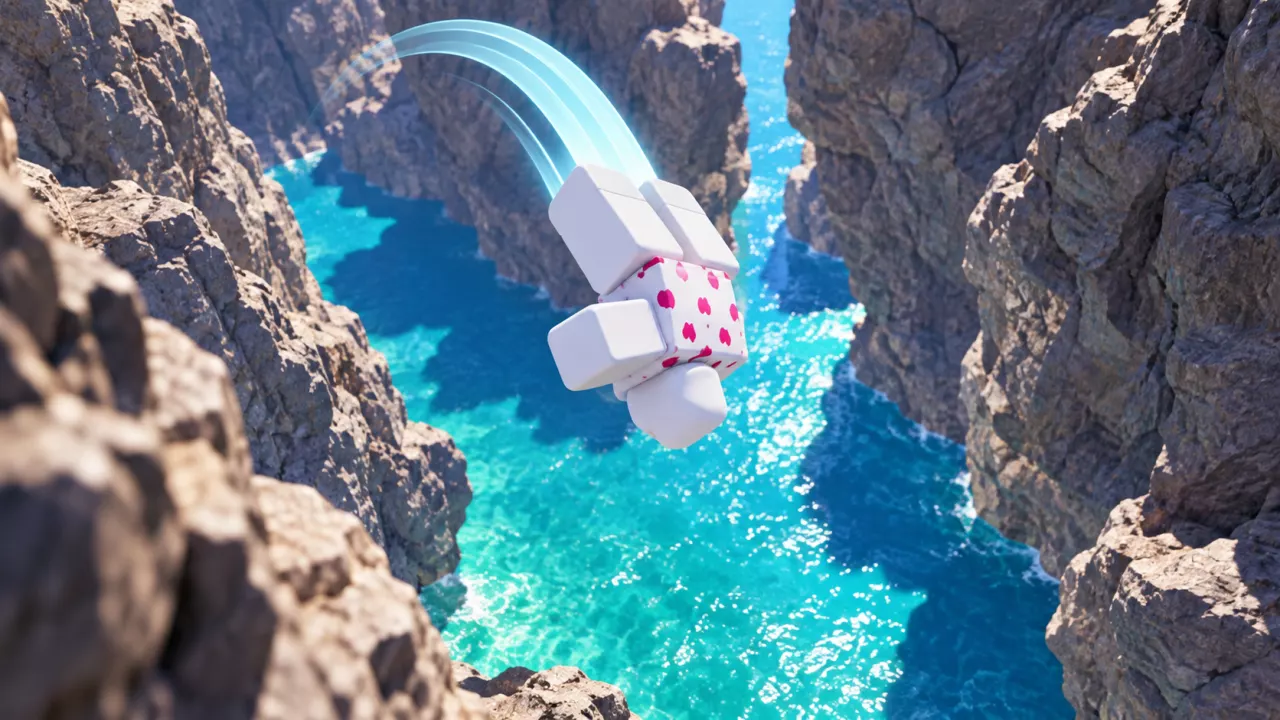
Build a Repeatable Scoring Dive
Freestyle, found under Jumps → SPECIAL, leaves all movement under your control. It suits practice sessions where you want to work on your own flip sequence and entry timing.
- Start with a simple flip sequence. Watch the completed-move count rather than judging only by your character's rotation.
- Finish with Head first and work toward consistent Clean Entry results.
- Check the result for credited tricks and the entry multiplier.
- Add twists or delay your entry only after you can reliably finish the simpler dive.
A successful entry needs trick points to multiply: No tricks can still finish at zero, even with a timing bonus. A failed entry can also erase a large trick score. Use the scoring guide to troubleshoot those results, or revisit the basic dive controls if the entry prompt is still difficult to follow.
Choose upgrades around the part of the dive you want to improve:
| Upgrade | Effect | Practice use |
|---|---|---|
| Spin Speed | Faster aerial flips and twists | Work on completing more movement during the descent. |
| Jump Power | Higher takeoff when leaving the edge | Change the launch height of your dive. |
After changing an upgrade, get comfortable with the new movement before pushing entry timing further. The upgrades page lists level-specific costs and effects.
Combine Flips and Twists
On touch controls, try holding right Twist and FRONT together during the descent. Keep your selected entry move's countdown and available prompt in view while watching for completed moves and Combo feedback. FRONT can produce different flip labels depending on the dive, so check the credited move name instead of assuming it always means Front Flip.
Combo bonuses can appear separately from the flips and twists that accompany them. For example, a Salt Ledge sequence can show Triple Back followed by Corkscrew, with Backflip, Twist, Triple Back, Screw, and Corkscrew listed separately in the result. That feedback order helps you recognize the sequence; it is not a button-by-button Corkscrew recipe.
For Tornado practice at Slide and Dive, try this input sequence after leaving the slide and returning to the airborne controls:
- Hold right Twist.
- Add BACK during part of the descent while continuing to hold right Twist.
- Release BACK and continue holding only right Twist while watching for Tornado feedback.
Use this as a practice example for the slide exit. For steering and boosts before returning to the air, follow the Slide and Dive guide.
After each attempt, compare:
- Which flips and twists were completed.
- Whether separate combo lines appeared.
- Whether the entry preserved the trick score.
If adding a twist makes you miss the entry, return to the simpler sequence until you can follow both the movement feedback and the entry prompt. Find move names and special-dive conditions in Jumps and Combos.
Practice Later Entries
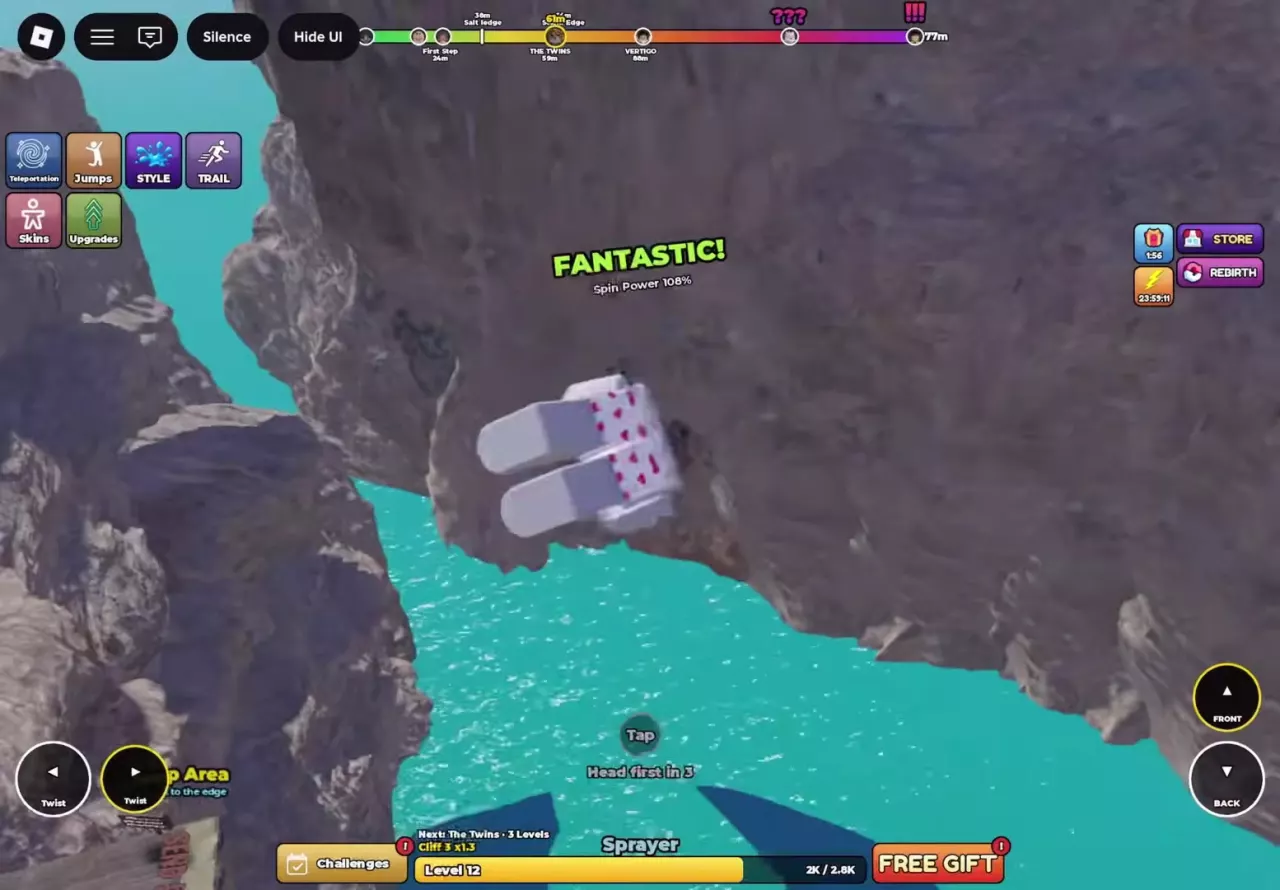
Late entries can add a Late Dive Bonus or Last-second dive! multiplier to the result. The useful target is a later entry that still succeeds, rather than another trick followed by a failed landing.
- Complete a scoring move during the descent.
- Watch Head first in 3, 2, 1 change to the available Head first prompt.
- Use the entry control before impact. Start with timing you can land consistently.
- On later attempts, delay that action gradually and check both the entry result and timing bonus.
| Controls | Available entry action |
|---|---|
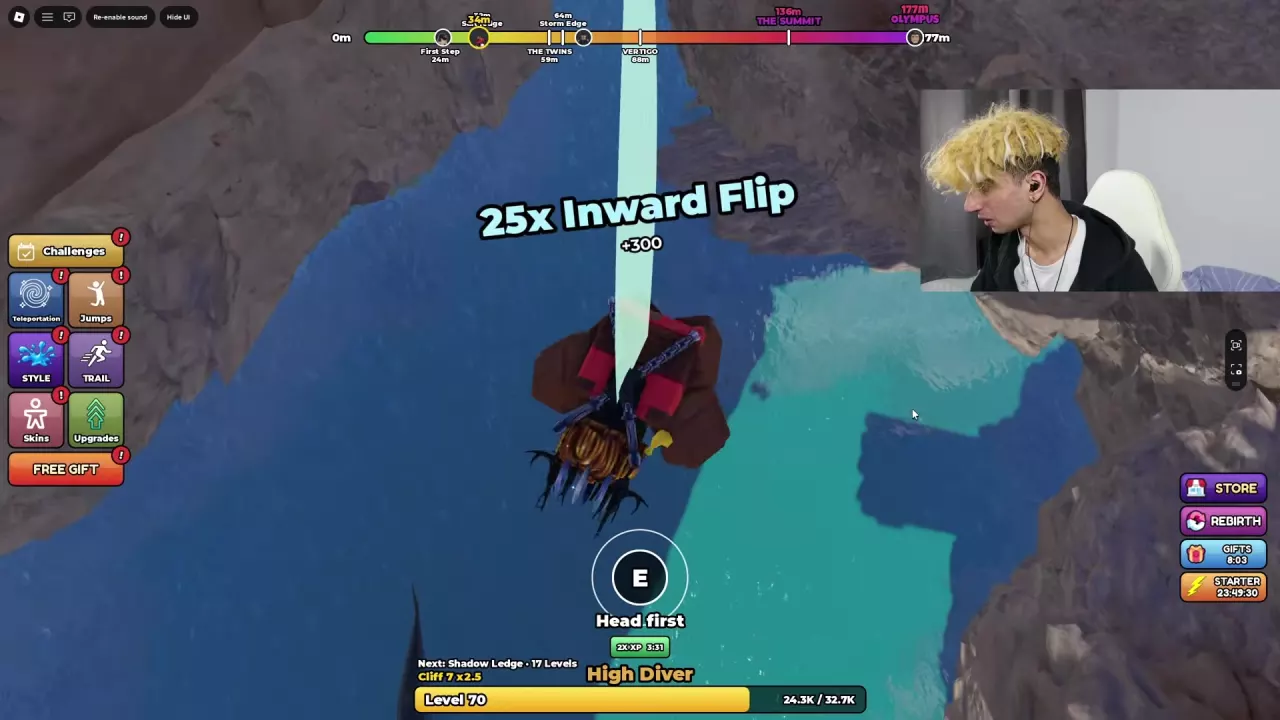
| Keyboard | Press E when Head first becomes available; the prompt has a surrounding ring. |
| Touch | Tap the blue Head first button with the central Tap prompt. |
Follow the countdown and your approach to the water instead of treating one altitude as a universal input point. Different cliffs, movement sequences, and upgrade setups change the situation you need to manage. If later timing starts producing failed entries, move the input earlier again.
Challenge Your Record at Vertigo and Olympus
Keep the cliff and upgrade setup in mind when comparing personal-record attempts. Vertigo and Olympus apply different cliff multipliers, so their final totals do not measure entry timing alone.
| Cliff | Displayed height | Cliff points multiplier |
|---|---|---|
| Vertigo | 88 m | ×1.75 |
| Olympus | 177 m | ×2.5 |
Vertigo unlocks at Level 22. A useful practice approach there is a FRONT takeoff followed by flips and twists, then a controlled Head first entry. Review completed-move counts alongside the entry result before trying to squeeze in more movement. Use Cliffs and Worlds for destination and progression details.
For an Olympus target, the following 71,804-point example used maxed Spin Speed, with the other upgrades left unchanged:
- Walk to the Jump Area at the edge and select BACK, facing the cliff.
- Confirm the moving power bar. This example received PERFECT! with 130% Spin Power.
- Continue the airborne flip sequence, watching Inward Flip and Triple Front feedback accumulate.
- Let the Head first countdown finish, then press E near the water while leaving enough time to enter head-first.
- Read the result for the trick breakdown, timing multiplier, and New personal record! message.
| Result component | Olympus example |
|---|---|
| Completed flips | 27x Inward Flip, worth 6,950 points |
| Combo scoring | 9x Triple Front, worth 6,762 points |
| Entry Bonus | ×1.5 |
| Cliff Bonus | ×2.5 |
| Timing bonus | Last-second dive! ×1.40 |
| Final score | 71,804 points |
Use this as a target sequence, not a guaranteed score or a required Spin Power threshold. Its value is the combination of repeated scoring moves, separate combo points, and a successful late entry. Maxed Spin Speed supports that approach, but the entry still has to land.